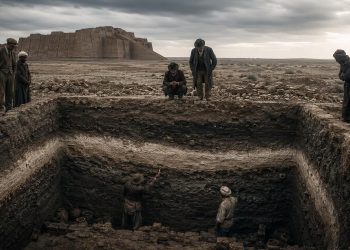
Archaeologists in France have uncovered a series of rare ancient skeletons buried in a highly unusual seated position beneath a modern elementary school in Dijon. The finds, dating back over 2,000 years to the Gallic (Celtic) period, continue to baffle experts due to their rarity and the deliberate nature of the burial rite.
The discoveries were made at the Josephine Baker school complex, where children attend classes just meters above these ancient graves. France’s National Institute for Preventive Archaeology (Inrap) announced the latest findings, adding to previous excavations at the site.
- Location and Context: Josephine Baker school in Dijon, approximately 195 miles southeast of Paris, with burials found under playground and school grounds.
- Burial Details: Skeletons placed in circular pits about one meter wide, seated with backs against the eastern wall, facing west; legs tightly flexed (often asymmetrically), arms along the torso with hands near the pelvis or femurs.
- Associated Finds: Minimal grave goods — only one rare black stone armband from the third century B.C.; some skeletons show signs of unhealed violence, including cuts and possible sword blows to the skull.
- Rarity: Seated burials are exceptionally uncommon, with only around 50 known worldwide across a dozen sites, often linked to elite, sanctuary, or worship areas rather than standard cemeteries.
- Timeline: Gallic period, roughly 300–200 B.C., predating Julius Caesar’s conquest of Gaul.
In 2025, excavators first uncovered 13 similar graves at the site. The most recent work revealed five to six additional seated burials, some forming a second parallel line with the earlier discoveries. In total, around 18–20 seated graves have now been documented in central Dijon, suggesting a significant Gallic presence in the area.
The skeletons are remarkably well-preserved, allowing detailed analysis. Experts note traces of osteoarthritis on some bones, indicating lives of intense physical activity. Several individuals display clear evidence of intentional violence, such as cuts on arm bones and fatal sharp-object trauma to the skull. Yet the burials lack typical offerings or personal items that might explain their status — whether as warriors, elites, or figures tied to religious practices.
Inrap researchers emphasize that seated burials appear sporadically throughout prehistory but remain rare. When they do occur, they are usually associated with places of importance, set apart from ordinary cemeteries. The consistent westward orientation, careful alignment in straight lines, and precise positioning deepen the mystery surrounding these Gallic customs.
This discovery highlights how modern urban development often brings hidden layers of history to light through preventive archaeology. Children at the Josephine Baker school now have a playground literally built over ancient Gauls, turning an ordinary schoolyard into an active archaeological site.
As studies continue on the bones and the surrounding context, archaeologists hope to better understand who these individuals were and why they received such a distinctive burial treatment. The Dijon seated skeletons offer a rare window into pre-Roman Celtic society, ritual practices, and possible connections to violence or special social status in eastern France.
For now, the puzzle endures: Why bury the dead sitting upright, facing west, in carefully prepared pits beneath what is today a bustling school? Future excavations and analyses may provide more answers, but the finds already underscore the extraordinary stories hidden just beneath our everyday spaces.
Based on reports from Inrap and coverage by Fox News Digital, with additional details from archaeological sources.
- Hand-curated links from conservative and Christian sites — NO legacy media garbage links. Patriots get their news every day at JDRucker.com