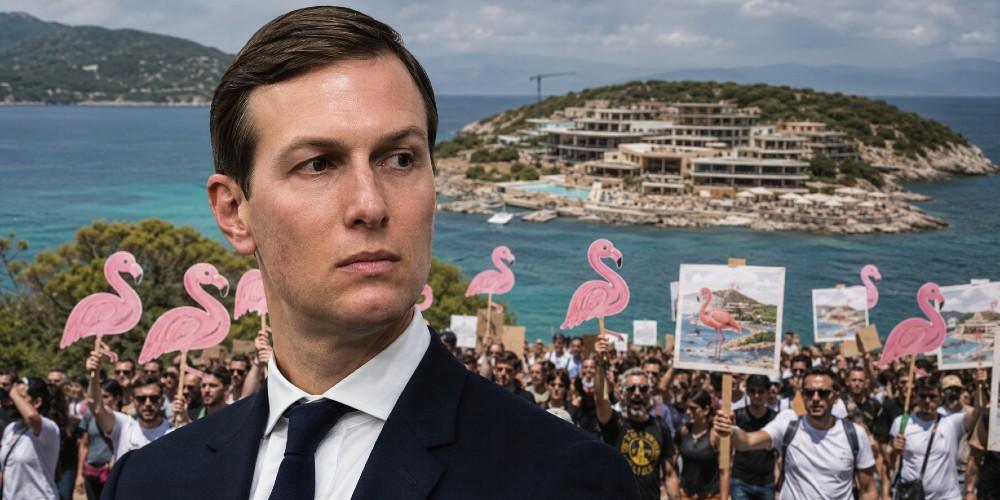
Thousands of protesters have taken to the streets of Tirana and coastal areas in Albania, waving pink flamingo cutouts and decrying a major luxury resort development linked to Jared Kushner and Ivanka Trump. What began as concerns over a former military island and protected wetlands has escalated into a week-long “Flamingo Revolution,” complete with viral footage and accusations of government opacity.
Yet beneath the spectacle lies a familiar pattern: elite media framing private investment as an environmental apocalypse while glossing over Albania’s desperate need for economic growth and the complexities of development in a post-communist nation. The project, involving Kushner’s Affinity Partners, promises substantial infrastructure, jobs, and tourism revenue in one of Europe’s poorest countries—a potential boon that warrants scrutiny, not reflexive outrage.
- Hand-curated links from conservative and Christian sites — NO legacy media garbage links. Patriots get their news every day at JDRucker.com
Sazan Island, once a secretive communist-era military outpost, and adjacent areas in the Vjosa-Narta zone represent an ambitious plan for high-end resorts. Valued at over a billion dollars, the initiative includes hotels and facilities designed to attract visitors to Albania’s Adriatic coast.
Ivanka Trump has spoken enthusiastically about discovering the area’s natural beauty during a sailing trip, envisioning a world-class destination.
Environmental groups, including the Protection and Preservation of the Natural Environment in Albania, highlight legitimate worries about wildlife habitats, including flamingos, sea turtles, and seals. Bulldozer activity sparked immediate backlash, with claims of destroyed dunes and disrupted ecosystems. Albania’s anti-corruption office has opened an investigation, and questions persist about public consultation and permitting transparency under Prime Minister Edi Rama’s socialist government.
The intensity of the protests—night after night in the capital—and the rapid international coverage suggest more than pure ecological alarm. Albania struggles with low GDP per capita, corruption scandals, and the lingering effects of decades under communist rule. Turning untapped potential into opportunity aligns with principles of human flourishing and prudent use of resources.
Prime Minister Rama has defended the project as essential for welcoming investment and avoiding the stigma of hostility toward developers. The company’s representatives emphasize responsible practices, environmental enhancements, job creation, and long-term community value. Preliminary approvals came with “strategic investor” status, accelerating processes in a nation eager to modernize.
Critics on the left, predictably, tie this to the Trump family, amplifying every activist claim while downplaying similar developments pursued by others. Media narratives often portray such projects as rapacious when connected to conservatives, yet celebrate foreign investment elsewhere.
The selective outrage echoes broader efforts to constrain prosperity under the guise of environmentalism, even as local residents express mixed views—some desiring tourism growth without sacrificing their heritage.
It doesn’t help quell the protests when it was Kushner’s friend, Not Rothschild, who helped him get in on the island in the first place.
Albania’s history offers context. Emerging from isolation and dictatorship, the country has pursued integration with the West and economic liberalization. Blocking transformative private capital risks perpetuating poverty rather than addressing genuine ecological challenges through better governance and targeted protections.
Proverbs reminds us of the diligent use of what God provides, but here the deeper call is to discernment: “Prove all things; hold fast that which is good” (1 Thessalonians 5:21).
Not every development is flawless, nor is every protest purely principled. Albania and its partners should pursue transparency, mitigate impacts, and deliver on promises of shared prosperity. Knee-jerk opposition that halts progress serves neither the environment nor the people.
As the investigation unfolds and voices on all sides engage, the true test will be whether Albania embraces opportunity with wisdom or allows symbolism to overshadow substance.