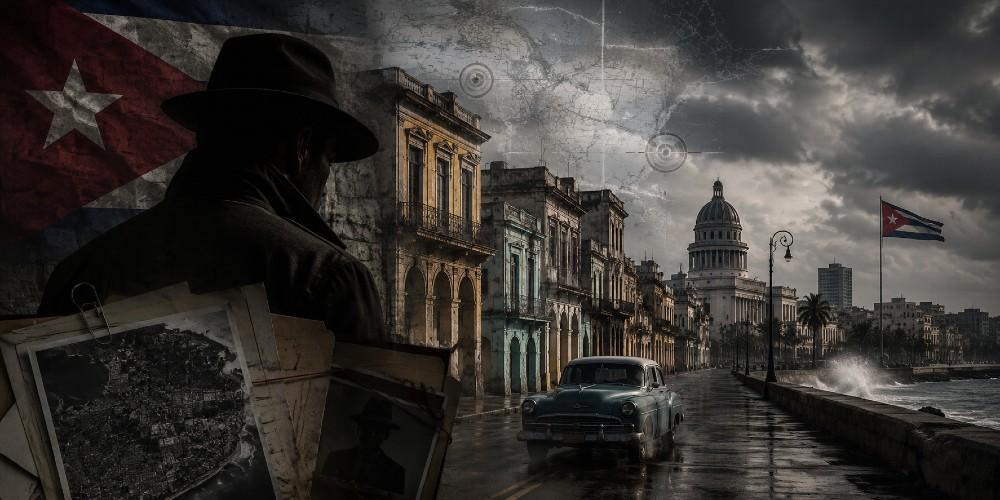
The potential end of the Iran War means our Intelligence Industrial Complex will move to their next target. That appears to be Cuba. And despite over two decades of warnings from the likes of John Bolton, Cuba does not pose a threat to the United States.
Before we go in and do, well, anything at all with Cuba, it’s imperative that we examine our history. The very notion of operating in Cuba smells squarely like an intelligence community folly. It’s not too late to reverse course.
For seven decades, the United States has grappled with the costly aftermath of interventions engineered by its own intelligence apparatus. From Tehran to Kabul, operations conceived in the shadows of Langley have repeatedly produced results that mocked their architects’ intentions. This pattern of unintended consequences reveals not mere tactical errors but a deeper institutional hubris—one that substitutes short-term maneuvering for prudent statecraft rooted in reality, history, and moral clarity.
The record speaks with uncomfortable clarity. In 1953, American operatives helped topple Iran’s elected Prime Minister Mohammad Mosaddegh, clearing the path for the Shah’s autocratic rule. That move, intended to secure Western oil interests and counter Soviet influence, fermented resentment that exploded in the 1979 Islamic Revolution.
Today, the mullahs’ regime stands as a testament to how regime change can birth adversaries far more implacable than those removed. Similar miscalculations litter the 20th and early 21st centuries, each promising stability yet delivering chaos.
These failures demand scrutiny not to indict every intelligence effort but to question the reflexive interventionism that has defined too much of U.S. foreign policy. When agencies presume to reshape nations they scarcely understand, they play God with peoples and histories far removed from American shores.
The Arrogance of Playing Puppet Master
Intelligence operatives excel at gathering secrets and executing tactical strikes, yet they repeatedly demonstrate ignorance of the cultural, religious, and historical forces that sustain legitimate authority abroad. They approach foreign societies as chessboards, forgetting that nations possess their own DNA of governance forged through centuries of trial. Replacing imperfect leaders with handpicked alternatives often imports the very instability those operations sought to prevent.
Consider the pattern of blowback, a term the CIA itself coined to describe the rebounding harms of covert actions. Arming mujahideen against the Soviets in Afghanistan during the 1980s helped birth networks that later turned against American interests. The Iraq invasion’s aftermath, with its ill-conceived de-Baathification and Chalabi fantasies, destabilized the region and empowered Iran. Each case underscores a failure to heed the limits of American power and the wisdom of non-interference where vital interests are not directly threatened.
Critics on the left often frame these episodes as proof of inherent American imperialism. Yet the conservative insight cuts deeper: such adventurism betrays the very principles of ordered liberty and republican restraint that define our founding.
The Constitution grants no blank check for global social engineering. James Madison warned against foreign entanglements that could corrupt domestic institutions. When spies operate with minimal accountability, they erode the separation of powers and public trust essential to self-government.
Lessons from History and the Human Condition
History abounds with warnings against overweening ambition in statecraft. The French Revolution’s zeal to remake Europe birthed Napoleonic wars and reaction. Soviet meddling in client states collapsed under the weight of its own contradictions. America’s intelligence community, populated more by technicians than statesmen, mirrors these errors by prioritizing the next news cycle over enduring consequences.
Recent flirtations with replacing Venezuelan strongman Nicolás Maduro exemplify the ongoing temptation. Proposals to elevate figures with dubious popular support ignore the massive diaspora and institutional collapse that no external savior can quickly mend. Without organic legitimacy, such efforts risk repeating the cycle: short-term disruption followed by long-term resentment and radicalization.
Prudence dictates a different course. Intelligence should inform defensive measures and targeted responses to genuine threats, not serve as an instrument for perpetual revolution abroad. A chastened approach aligns with America’s core strengths—economic vitality, military deterrence, and moral example—rather than dissipating them in quixotic quests.
This recurring pattern of overreach invites reflection on human nature itself. America’s security ultimately rests not in the cleverness of its spies but in alignment with providential order and humble recognition of limits.
The intelligence community’s track record calls for congressional oversight, cultural reform within the agencies, and a national recommitment to foreign policy realism. Only then can we break the cycle of self-inflicted wounds that has defined too much of the post-World War II era.